Category: Uncategorized

  • BELL LANE CREEK and RIVER WANDLE

    PCC NOTES ON VISITING THAMES CREEKS

    rnrn

    BELL LANE CREEK and RIVER WANDLE

    rnrn

    The creek is best tackled on a rising tide. The journey from Limehouse takes around one hour. High water at Bell Lane Creek is 30 minutes after High Water London Bridge. The creek is accessible for around 2 hours either side of high water. The optimum time to leave Limehouse is 2Y2 hours before High Water at London Bridge. This ensures adequate time to visit the creek and continue upstream to Brentford. Remember to keep to the right hand third of the river on your passage upstream to Wandsworth Bridge.

    rnrn

    The Creek, which is at the mouth of the River Wandle, was once used by lighters and sailing barges to service Wandsworth Town Wharf . This was particularly so after the adjacent MacMurray’s canal lock was closed in 1923, subsequently the Creek was used by pleasure craft. The entrance is in the southern bank of the river, one quarter of a mile upstream of Wandsworth Bridge and is located just beyond the western boundary of the West London Waste Transfer Site and Wharfs which are easily recognised by the lighters with the waste containers and the large mobile gantry cranes!

    rnrn

    Some ten years ago an impounding weir was constructed at the Creek Mouth. This acts as a ‘half tide’ sluice. The gate, situated between the Red and Green Marker Posts, which define the navigable channel ten metres wide, can be raised automatically when the tide falls to weir level to impound the remaining water in the Creek The Gate remains in the lowered position during high water to facilitate the transit of craft. The aim is to use this window to enter and leave the Creek.

    rnrn

    Navigators may wish to note that the Crest of the Weir is at 1.90 metres above OD, but the Cill level with the Gate Lowered is at 0.00 AOD, giving a minimum depth of water over the lowered gate sill of 1.90 metres in relation to the crest of the weir. The actual depth of water above the sill at any time is indicated on the gauge board attached to the river wall.

    rnrn

    By leaving Limehouse 2Y2 hours before HW LB, by the time you reach the Creek, there should be adequate depth over the gate to make the transit into the Creek. However, it is always wise to proceed slowly over the gate itself!

    rnrn

    The Creek is less than 14 mile in length and follows the Right Hand Fork just upstream of the entrance. Proceed slowly under the railway bridge and turn to the left to reach the creek end at Bell Weir. Depending on the length of craft, turning in the creek is possible, but sometimes it is necessary to reverse back to the bend to facilitate the turn.

    rnrn

    Proceed up the Creek, take your photos, and then return the way you came in, again taking care to slowly cross the gate area. The visit should take about 25 minutes overall.

    rnrn

    The onward journey to Brentford takes 114 hours and it is recommended that craft proceed upstream to Brentford Thames Lock which is open 2 hours either side of HW Brentford (one hour later than HW London Bridge).

    rnrn

    Please note, you will be arriving at Brentford around High Water. This will mean that headroom will be severely restricted under Brentford High Street Bridge. Take the centre of the arch and proceed with caution. The Gauging Lock ahead is User Operated with a CRT key.

    rnrn

    ALL BOATERS AND SKIPPERS ARE REMINDED THAT THEY UNDERTAKE THE CRUISES COMPLETELY AT THEIR OWN RISK. THE ST. PANCRAS CRUISING CLUB AND ITS OFFICERS CANNOT ACCEPT ANY LIABILITY FOR THE SAFETY OF CRAFT ON THE TIDAL THAMES

    rn

  • St Pancras Lock

    Content to be added.

  • BOW CREEK and DEPTFORD CREEK

    NOTES ON VISITING THE THAMES CREEKS

    rnrn

    BOW CREEK and DEPTFORD CREEK

    rnrn

    BOW CREEK — A trip down Bow Creek to the Lighthouse at Creek Mouth provides a unique excursion and with the right timing is perfectly safe for narrowboats. It is essential to book Bow Locks 24 hours in advance as normally the locks are unmanned. (Telephone: 020 7517 5570). Aim to leave Bow Locks 11/2 hours before High Water London Bridge (HWLB). Keep to the centre of the channel and take great care on the various blind bends. There was a waste transfer site just downstream of Bow Locks. Watch out for tugs moving lighters or for transfer taking place. Turn inside the Creek Mouth by the lighthouse. The outward trip against the tide takes 35 minutes and 25 minutes for the return trip on the tide. Bow Locks should be open on your return which will be just before high water. However, it is essential to ensure you have pre-booked the lock keeper for the return journey.

    rnrn

    DEPTFORD CREEK — A visit to Deptford Creek is best organised from Bow. Leave 21/2 hours before HWLB. Take care to keep to the centre of Bow Creek. The tidal river journey from Bow Locks via Bow Creek, the Thames and Deptford Creek will take up to 13/4 hours, plus an extra 40 minutes for the Deptford Creek. Whilst cruising down Bow Creek and into the Thames boats will have to PUNCH THE TIDE. On turning upstream boats on the cruise will gain the benefit of the 4 knot incoming tide. At normal main line canal cruising revs with the tide run most boats will move at a speed of 6 mph. Deptford Creek entrance is sometimes difficult to see, so check your map. Proceed up the CENTRE OF THE CREEK and TURN WHERE MARKED ON THE MAP. Retrace your route to return to the Creek Mouth and then continue upstream. Boats should reach Limehouse Lock before the Top of the Tide. Call on VHF 80 just before you arrive at the lock so that the keeper can get it ready. Skippers should be ready to follow the Lockmaster’s directions at Limehouse. Be ready to stand off and await locking through. Please have a note of your BW Licence Number handy as all craft licences may be checked at this point. The number is the one at the bottom of your licence disc.

    rnrn

    DURING YOUR TRIP ON THE TIDAL THAMES PLEASE TAKE EXTRA CARE

    rnrn

    Remember:

    rnrn

      rn

    1. KEEP TO THE RIGHT; DO NOT STRAY OUT TO THE CENTRE OF RIVER. FOLLOW THE NORTHERN BANK AND PASS INSIDE BARGE MOORINGS.
    2. rn

    3. BEWARE OF DRIFT WOOD AND COMMERCIAL TRAFFIC IN BOW CREEK AND ON THE THAMES.
    4. rn

    5. DO NOT SAIL TOO CLOSE TO THE THAMES BUOYS AND PIERS AS THE TIDE RUN WILL CATCH YOU and distort your course. Take care before turning across the tide-way to the mouth of Bow Creek. WATCH OUT FOR CRAFT COMING FAST UPSTREAM ON THE TIDE. GIVE ONE LONG BLAST ON YOUR HORN ON EXIT.
    6. rn

    7. WATCH OUT FOR THE WASH of trips boats and commercial craft, especially between Greenwich and Limehouse Lock. Turn your bow into the waves and then return to your normal course after you have ridden the waves.
    8. rn

    9. WATCH OUT FOR THE BARGE TOWS. All being well they should have gone up river before we leave Bow Creek.
    10. rn

    11. ROWERS are sometimes in evidence around Greenwich. HOOT WITH ONE BLAST if you are in doubt that they have not realised you are there.
    12. rn

    13. CHECK BOTH UP AND DOWNSTREAM FOR OTHER TRAFFIC BEFORE TURNING TO CROSS THE FAIRWAY TO DEPTFORD CREEK ENTRANCE. Do not turn too early; in that way you avoid the large buoys downstream of the Creek Mouth.
    14. rn

    15. Keep to the centre of the channel up Deptford Creek. Take the centre lifting span of the lattice girder lifting railway bridge. Turn at the entrance end of the Upper Basin as the far end tends to collect rubbish and shopping trolleys underwater. 70ft boats may find it easier to turn in the mouth of the short arm just before the Creek Head.
    16. rn

    17. Headroom at NARROW STREET BRIDGE IS RESTRICTED. Check your height before trying to pass under it. If in doubt wait on the outer pontoon (East Side) until the tide ebbs or the bridge swings.
    18. rn

    19. EMERGENCY moorings are marked on the map supplied. Those at Greenland Pier are available ONLY if craft are in difficulty. Otherwise tie alongside moored barges if you cannot proceed and signal for assistance.
    20. rn

    rnrn

    REMINDERS Book the locks at Bow 24 hours in advanceCheck for sufficient fuelCheck fan beltHave lifebuoy handy with line attachedInstall anchorChildren especially are advised to wear life jackets. Animals should be kept under control inside your craft. All boats over 45ft are required by the PLA regulations to carry a VHF Marine Radio.

    rnrn

    ALL BOATERS AND SKIPPERS ARE REMINDED THAT THEY UNDERTAKE THE CRUISES COMPLETELY AT THEIR OWN RISK. THE ST. PANCRAS CRUISING CLUB AND ITS OFFICERS CANNOT ACCEPT ANY LIABILITY FOR THE SAFETY OF CRAFT ON RIVERS, CANALS OR THE TIDAL THAMES

    rn
  • General Meeting papers

    Content to be added.

  • Committee and Officers

    St Pancras Cruising Club – Committee

    rnrn

    rn

    rn

    rn

    rn

    rn

    rn

    rn

    rn

    rn

    rn

    rn

    rn

    rn

    rn

    rn

    rn

    rn

    rn

    rn

    rn

    rn

    rn

    rn

    rn

    rn

    rn

    rn

    rn

    rn

    rn

    rn

    rn

    rn

    rn

    rn

    rn

    rn

    rn

    rn

    rn

    rn

    rn

    rn

    rn

    rn

    rn

    rn

    rn

    rn

    rn

    rn

    rn

    rn

    rn

    rn

    rn

    rn

    rn

    rn

    rn

    rn

    rn

    rn

    rn

    rn

    rn

    rn

    rn

    rn

    rn

    rn

    rn

    rn

    rn

    Name

    rn

    rn

    Position

    rn

    rn

    Email

    rn

    rn

    Colin Parlett

    rn

    rn

    Commodore

    rn

    rn

    commodore@stpancrascc.co.uk

    rn

    rn

    David Leppard

    rn

    rn

    Vice Commodore

    rn

    rn

    vicecommodore@stpancrascc.co.uk

    rn

    rn


    rn

    rn

    Rear Commodore

    rn

     
    rn

    Garrie Naden

    rn

    rn

    Hon. Treasurer

    rn

    rn

    treasurer@stpancrascc.co.uk

    rn

    rn

    Paul Willett

    rn

    rn

    Hon. Harbourmaster

    rn

    rn

    harbourmaster@stpancrascc.co.uk

    rn

    rn

    Tony Hay

    rn

    rn

    Hon. Secretary

    rn

    rn

    secretary@stpancrascc.co.uk

    rn

    rn

    Tim Lewis

    rn

    rn

    Committee member and Web Master

    rn

    rn

    rn

    Mikki Rain Committee member  
    Oli Soutar Committee member  
    rn

    Julie Clark

    rn

    rn

    Committee member

    rn

    rn

    Gardening Co-ordinator

    rn

    Sallyann Ford Committee member Membership officer   Membership@stpancrascc.co.uk
    rn

    Christina Oelgemoller

    rn

    rn

    Committee member

    rn

    rn

    Data Protection Officer

    rn

    Steve Burt Committee member  

    rnrn


    rnrn

    St Pancras Cruising Club – Other Officers

    rnrn

    rn

    rn

    rn

    rn

    rn

    rn

    rn

    rn

    rn

    Sash Keir

    rn

    rn

    Hon. Vice President

    rn

    rn

    vicepresident@stpancrascc.co.uk

    rn

    rnrn


    rnrn

    rnFull List Of Club Officers And Committee members 

    rn

  • An exploration of BARKING CREEK

    rn

    SPCC NOTES ON VISITING THAMES CREEKS

    rnrn

    An exploration of BARKING CREEK

    rnrn

    Barking Creek is still an active commercial navigation with small coasters trading from the wharfs in the lower reaches. Sadly traffic no longer uses the formerly navigable River Roding Navigation to Ilford Bridge, but with the advent of the new Barking Barrage it is again accessible by smaller craft and canoes. Headroom restrictions at the bridges stop its access by higher air draft craft. Prior booking of BOW LOCKS and BARKING BARRIER is essential.

    rnrn

    THE TIME TABLING OF THE TRIP IS CRITICAL. THE KEY ELEMENTS ARE SET OUT BELOW

    rn

    rnrn

    Exit Bow Locks HW, 3.5 hours Bow Creek Mouth HW, 3 hours

    rnrn

    rn

    Leave Barking Creek Mouth HW(LB), 0.8 hours Arrive Bow Creek Mouth HW, + 0.5 hours

    rn

    rnrn

    Barking Creek Mouth HW(LB), – 1.75 hours (NB: If you arrive later than + HW(LB), + 0.75 divert to Limehouse)

    rnrn

    Tour of Creek 0.9 hours maximum                              Arrive Bow Locks HW, + 1 hour (A diversion to Limehouse takes +2hrs)

    rnrn

    THE CRUISE DETAILS

    rnrn

    The trip involves pushing against the tide for much of the outward journey and some of the return trip. The timings depend on the engine size and the hull profile. The following times relate to a reasonable hull shape powered by a 1500cc engine.

    rnrn

    Two factors control the trip; the TIDES and WEATHER. A tide at the neap end is preferable to a Spring. The trip must be made in daylight with good visibility and a wind no greater than FORCE 3, preferably less.

    rnrn

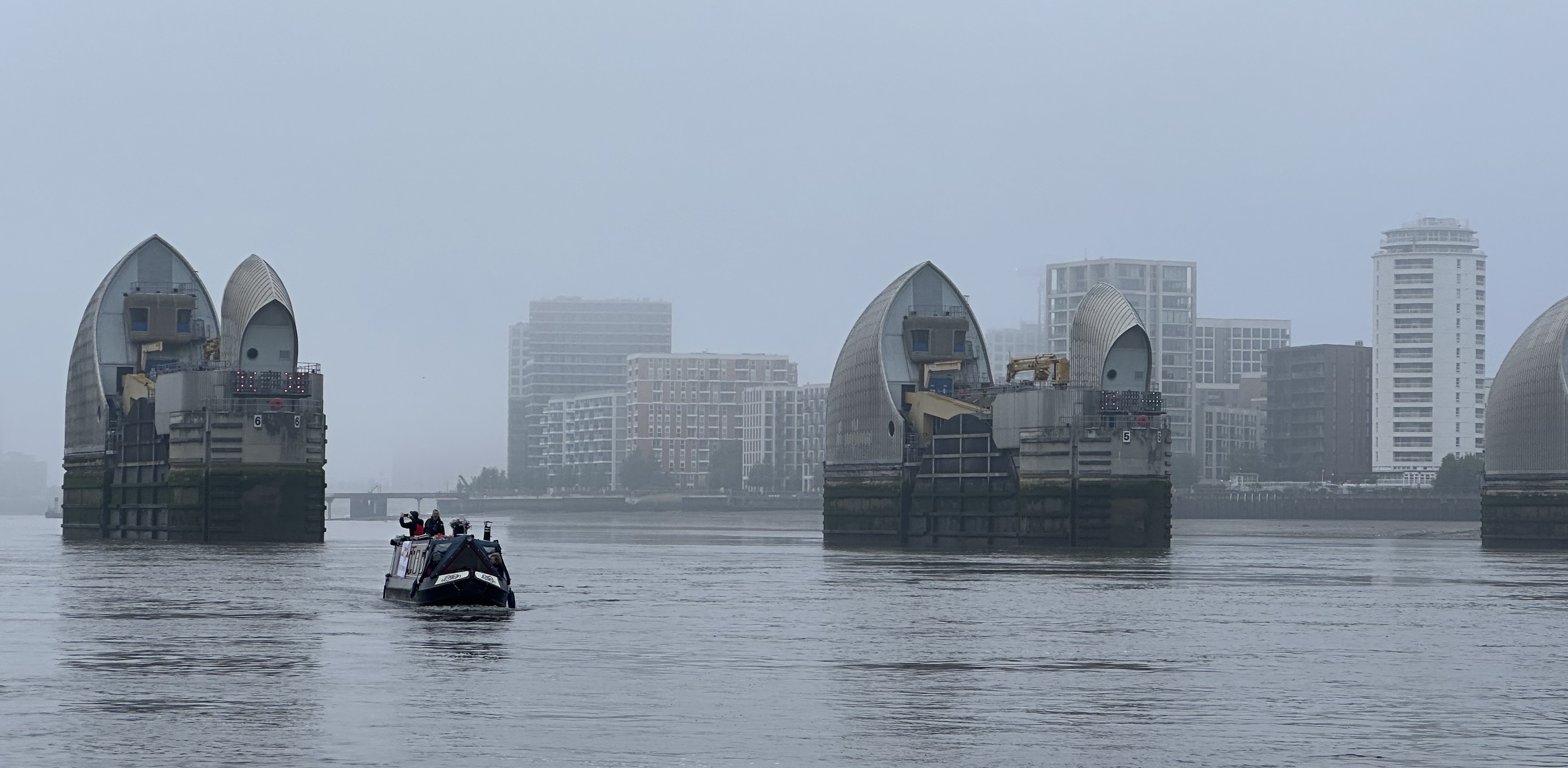
    The cruise starts at Bow Locks which must be pre-booked. Although the locks nominally open 4 hours before high water, experience suggests there is not usually enough water for a safe exit until around 3.5 hours before High Water. The lock keeper will tell us when the levels are right. Leave Bow as soon as the lock keeper allows and follow the centre line of the creek to the mouth. This will take about 30 minutes. Check for other craft on the Thames, then give a long blast on your horn and cross the fairway to follow the southern shore downstream. Call Woolwich Barrier Control (VHF 14) to gain clearance for transit. Pass between the green arrows at the Thames Barrier Spans. Check your passage past the Woolwich Ferry as they move very quickly from shore to shore. Continue downstream to the Barking Creek Mouth. Do not cross the fairway too soon as the tide run is on the Northern side here and it will push you upstream; i.e. turn below the Creek Mouth. Keep inside the Yellow Barrel Buoy which marks the end of a shoal and pass under the Flood Barrier at the Creek Mouth.

    rnrn

    The journey time from Bow Creek Mouth to Barking Creek Mouth is approximately 1 hour 20 minutes. Aim to arrive at the Creek Mouth around 1.75 hours before High Tide at Bow, but this is only 1.25 hours before High Water at Barking.

    rnrn

    Take extra care as you pass through the Barking Flood Barrier and proceed up the Creek following a centre line. Take extra care at the new Tidal Barrage site adjacent to Regent Oil Co. Wharf. Check that the lights are showing green which indicates the Barrage is open and proceed up to the Mill Pool where you turn. Watch out in the Creek for floating ropes, etc. The journey up the Creek to the barrage takes 20 minutes. The Mill Pool takes another 5 minutes.

    rnrn

    Take your photos but do not dawdle. Aim to spend 50 minutes maximum within Barking Creek before heading back upstream. The aim is to pass between the Green Arrows of the Thames Barrier before the tide turns. Here again clearance must be obtained for transit. (Call VHF 14).

    rnrn

    The aim is to reach Bow Creek Mouth by High Water Bow plus 20 minutes to ensure a safe transit back to Bow Locks which close 2 hours after High Water. You need to remember that by one hour after high water the tide run down the Creek gets much faster, and your progress against it much slower. In consequence if you enter Bow Creek Mouth later than one hour after high water you will have difficulty in reaching the locks before they close through lack of draught. In this situation it is better to continue up the Thames to Limehouse where the lock remains operational for 3.5 hours after HWLB. That journey, pushing against an out flowing tide will take at least 2 hours

    rnrn

    On arrival at the Locks at Bow the keeper should be waiting. You will then have completed your transit to Barking Creek. If you divert to Limehouse, please remember to phone Bow Locks to cancel your return booking. By prior arrangement, it is possible to stay over in Barking Creek above the barrier. In such circumstances the return trip can normally be made on the following day’s tide. It is best to leave as soon as the incoming tide makes a level and the barrier gates can open.

    rnrn

    USEFUL CONTACTS:

    rnrn

    Bow Locks Locks to the River Thames | Boating in London

    rnrn

    Barking Tidal Barrier 01474 562250,

    rnrn

    Weather Forecast 0891 226 456

    rnrn

    Woolwich Barrier Control 020 8855 0315,

    rnrn

    Barking Barrier Bookings 020 8227 3202,

    rnrn

    Barking Wharf Moorings 020 8591 7324

    rnrn

    ALL BOATERS AND SKIPPERS ARE REMINDED THAT THEY UNDERTAKE THE CRUISES COMPLETELY AT THEIR OWN RISK. THE ST. PANCRAS CRUISING CLUB AND ITS OFFICERS CANNOT ACCEPT ANY LIABILITY FOR THE SAFETY OF CRAFT ON RIVERS, CANALS OR THE TIDAL THAMES

    rn
  • Waterways of Eastern England
    Fossdyke & Witham Navigations Navigation authority: Canal & River Trust
    rnrn

    Facilities map (Fossdyke)

    rnrn

    River gauge data from Gaugemap Jim Shead’s waterway pages (Fossdyke)

    rnrn

    im Shead’s waterway pages (Witham) Simon Judge’s blog on the Witham Navigable Drains Boat Clubs:

    rnrn

    Burton Waters Boat Club Torksey Yacht Club

    rnrn

    Wash Transit

    rnrn

    Wisbech Harbour Authority

    rnrn

    Local Notices to Mariners

    rnrn

    Simon Judge’s blog of his Wash transit in 2015.

    rnrn

    River Great Ous

    rnrn

    e Navigation authority: Environment Agency (EA)

    rnrn

    Bridge heights,

    rnrn

    locks,

    rnrn

    overhead power lines and facilities

    rnrn

    River advice Navigation closures, notices and river conditions

    rnrn

    Register for the EA strong stream

    rnrn

    alerts for the Bedford Ouse (Earith to Bedford) EA waterways team Twitter feed River gauge data from Gaugemap Great Ouse Boating Association – well worth joining for access to their mooring sites. Facilities guide River levels Great Ouse Boater Facebook group Bridge Boatyard waterway map (download) Jim Shead’s waterway pages Boat clubs: Bedford Boat Club Denver Cruising Club Ouse Valley River Club Pike and Eel Boat Club (St.Ives) Upware Boat Club Whitehouse Boating Club (St Neots) Connected Waterways

    rnrn

    River Wissey River Little Ouse River Lark Cambridgeshire Lodes River Cam

    rnrn

    Navigation authority: Conservators of the River Cam

    rnrn

    Boating home page Short term licences River dimensions (download) Short stay moorings Facilities map River levels Cambridge City Council – moorings Jim Shead’s waterway pages Boat clubs: Cambridge Motor Boat Club (Waterbeach) Middle Level Navigations Navigation authority: Middle Level Commissioners Navigation Home Navigation Notes, River Advice for Boaters, Navigation Byelaws Navigation Map & Map showing minimum headrooms for low bridges Suspension of Navigation Notices Peterborough IWA – cruising times & distances Jim Shead’s waterway pages Bilfen Marina – map (download) Boat clubs: March Cruising Club Middle Level Watermens’ Club River Nene

    rnrn

    Navigation authority: Environment Agency

    rnrn

    Bridge heights,

    rnrn

    locks,

    rnrn

    overhead power lines and facilities River advice Navigation closures, notices and river conditions Guide to Visitor Moorings, Water Points, Pump-Out and Elsan facilities (download) Register for the EA strong stream alerts for the Nene EA waterways team Twitter feed River gauge data from Gaugemap Friends of the River Nene – maintain their own mooring sites Facilities guide Guide to Nene moorings Jim Shead’s waterway pages Peterborough IWA – cruising times & distances Boat clubs: Association of Nene River Clubs Barnwell Boat Club Elton Boat Club Middle Nene Cruising Club Northampton Boat Club Oundle Cruising Club Peterborough Yacht Club Other East Anglian Waterways Association

    rn